> ## Documentation Index
> Fetch the complete documentation index at: https://docs.superjoin.ai/llms.txt
> Use this file to discover all available pages before exploring further.

# Connect your Redshift Database to Google Sheets

> Easily connect your Amazon Redshift database to Google Sheets for streamlined data access and analysis.

Connecting your applications to a database can seem daunting, but with Superjoin, linking to an Amazon Redshift database is streamlined and secure. This detailed guide will walk you through the process step-by-step, troubleshoot common issues, and ensure your connections are as robust as they can be. Let’s dive in!

## Step-by-step walkthrough: How to connect Redshift to Google Sheets

<iframe width="560" height="415" src="https://www.youtube.com/embed/m5muhl6xODY?si=hvT-fb_7WXsmQZrk" title="Pull data from Redshift to Google Sheets" frameBorder="0" allow="accelerometer; autoplay; clipboard-write; encrypted-media; gyroscope; picture-in-picture; web-share" allowFullScreen style={{ width: "100%", borderRadius: "0.5rem" }} />

<Steps titleSize="h2">
  <Step title="Launch Superjoin">
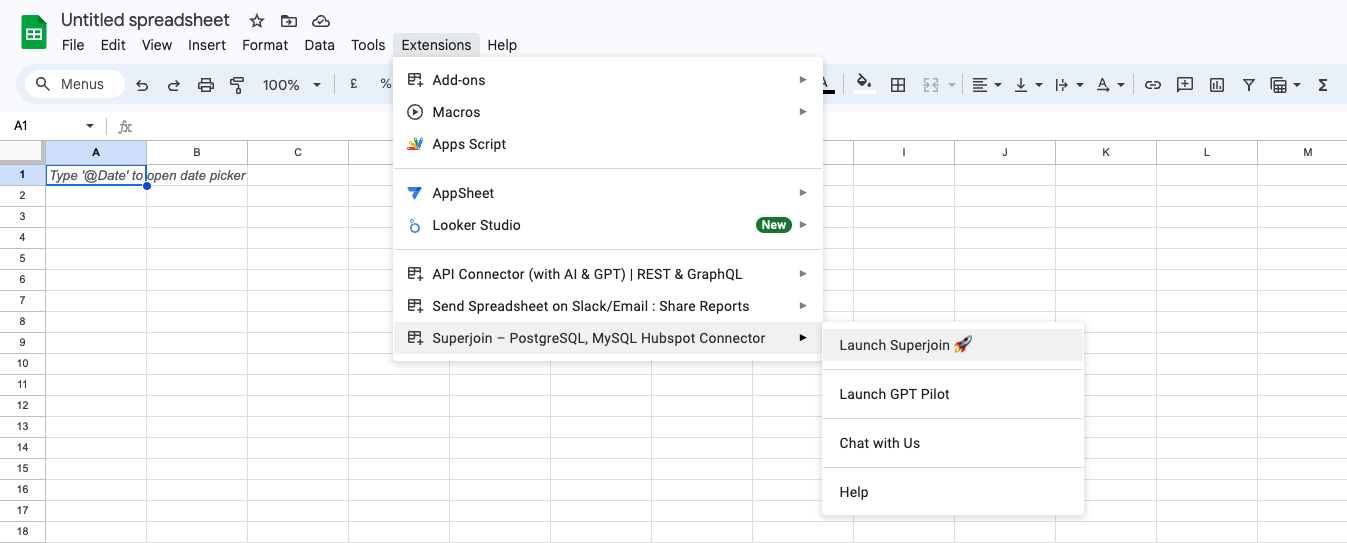
    Once Superjoin is installed, navigate to the `Extensions` menu tab in Google Sheets. Launch Superjoin from here. You should now see Superjoin running as a side panel on the right side of your screen.

    <Frame>
      <img src="https://mintcdn.com/superjoin/gjRFjFkthepgDSdX/images/launchstackit.png?fit=max&auto=format&n=gjRFjFkthepgDSdX&q=85&s=14e2ecb541402cb914b79951a8faff16" width="1347" height="543" data-path="images/launchstackit.png" />
    </Frame>
  </Step>

  <Step title="Pick Redshift">
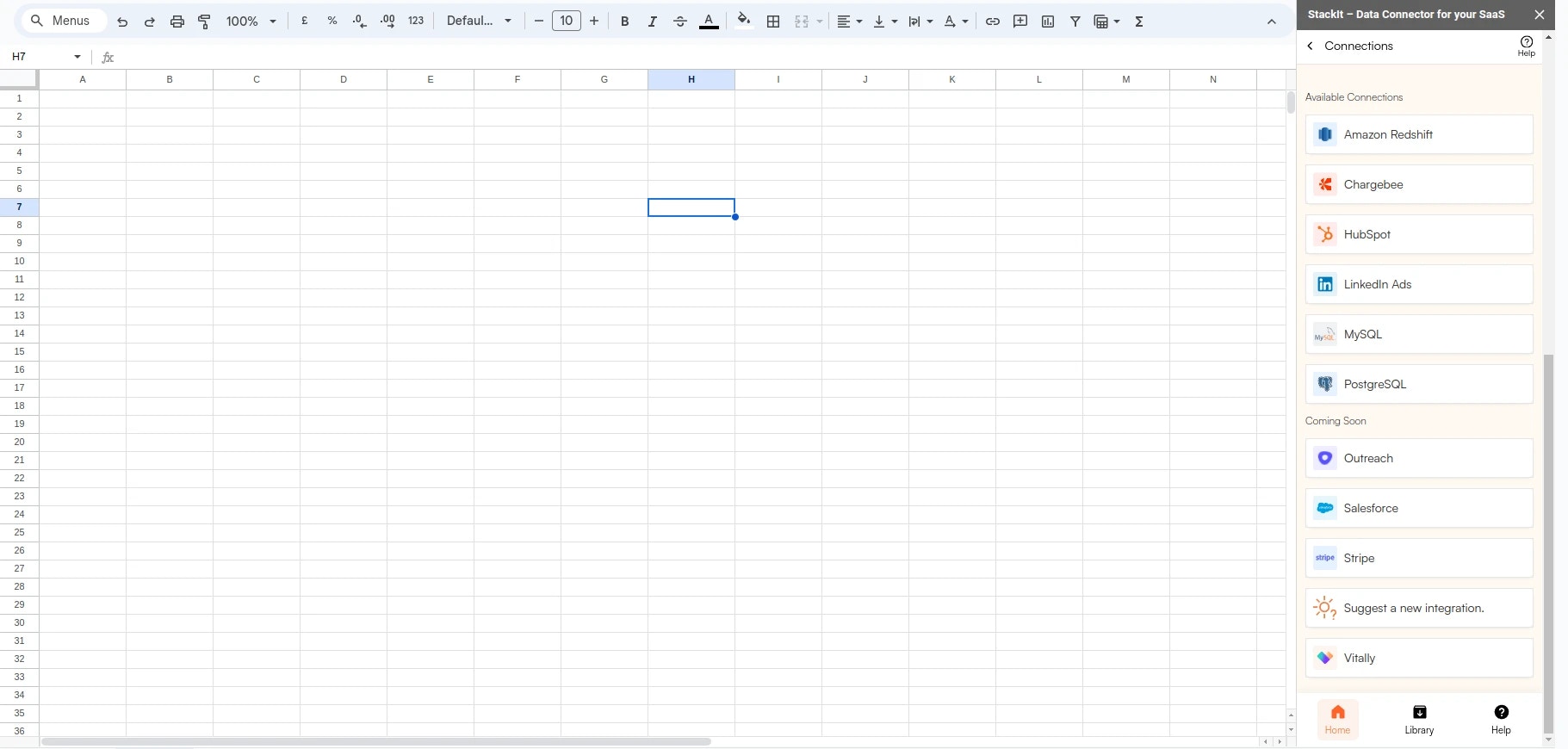
    Select Redshift from the list of available data sources.

    <Frame>
      <img src="https://mintcdn.com/superjoin/95T8cmea616drJuC/images/mysql/ms-step2.webp?fit=max&auto=format&n=95T8cmea616drJuC&q=85&s=5137dae9dc53eb1d88167b978e1ec98c" width="1821" height="870" data-path="images/mysql/ms-step2.webp" />
    </Frame>
  </Step>

  <Step title="Connect your Redshift Database">
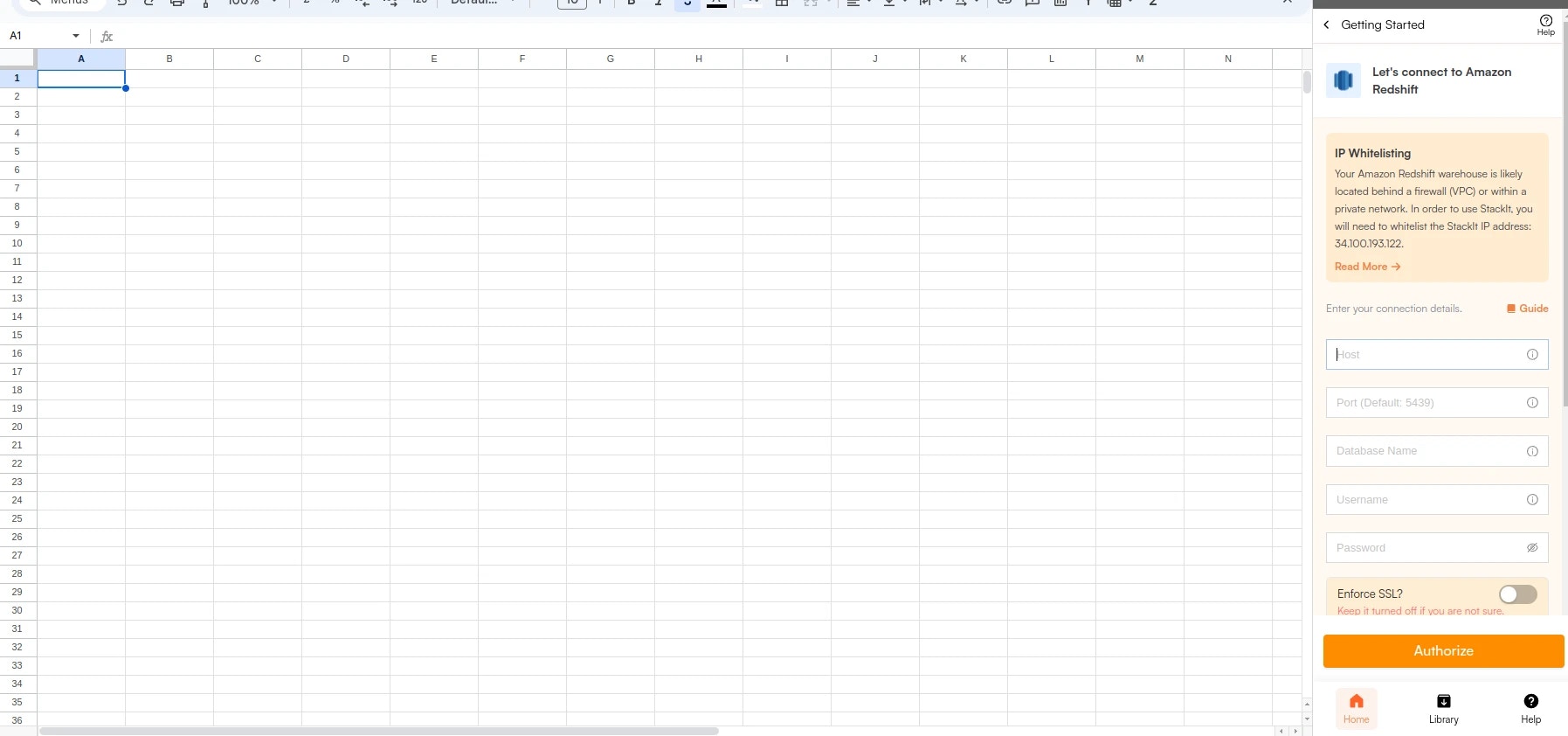
    Enter your connection details.

    | Field    | Description                                                                                    | Example                                                         |
    | -------- | ---------------------------------------------------------------------------------------------- | --------------------------------------------------------------- |
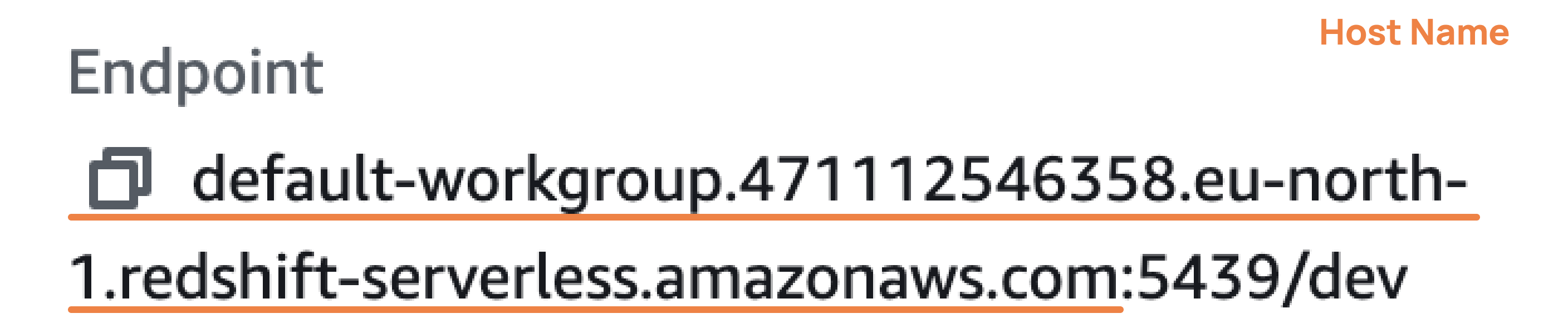
    | Host     | This is the endpoint of your Redshift cluster, which acts as the host for connection purposes. | your-cluster-name.123456789012.us-west-2.redshift.amazonaws.com |
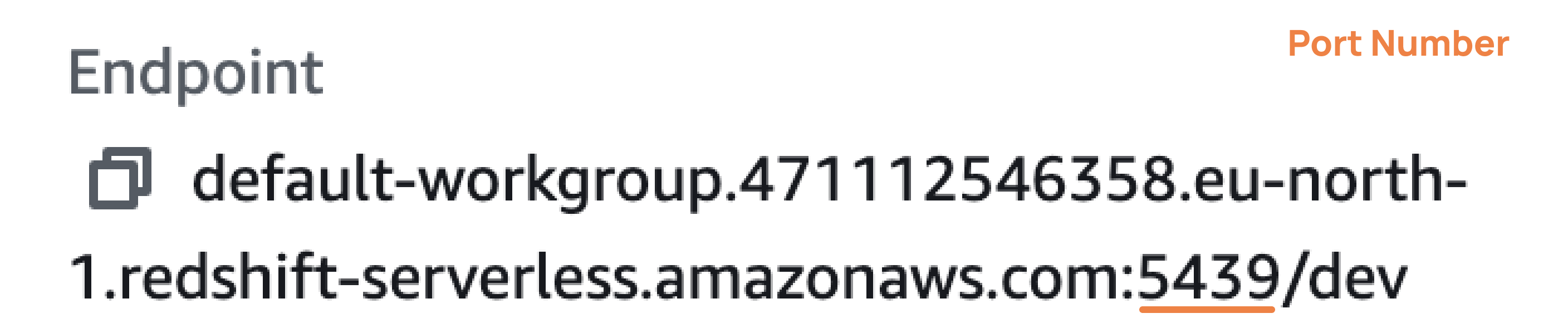
    | Port     | Use the specific port for your Redshift database.                                              | Default is 5439                                                 |
    | Database | Specify the name of the database within your Redshift cluster that you want to query.          | mydatabase                                                      |
    | User     | Enter the username for connecting to your Redshift database.                                   | awsuser                                                         |
    | Password | Provide the password corresponding to the specified user.                                      | password123                                                     |

    <Frame>
      <img src="https://mintcdn.com/superjoin/95T8cmea616drJuC/images/redshift/redshift-step3.webp?fit=max&auto=format&n=95T8cmea616drJuC&q=85&s=4d97b2643a0fbb9cb9016bcabecd0bdf" width="1795" height="842" data-path="images/redshift/redshift-step3.webp" />
    </Frame>
  </Step>

  <Step title="Login to AWS">
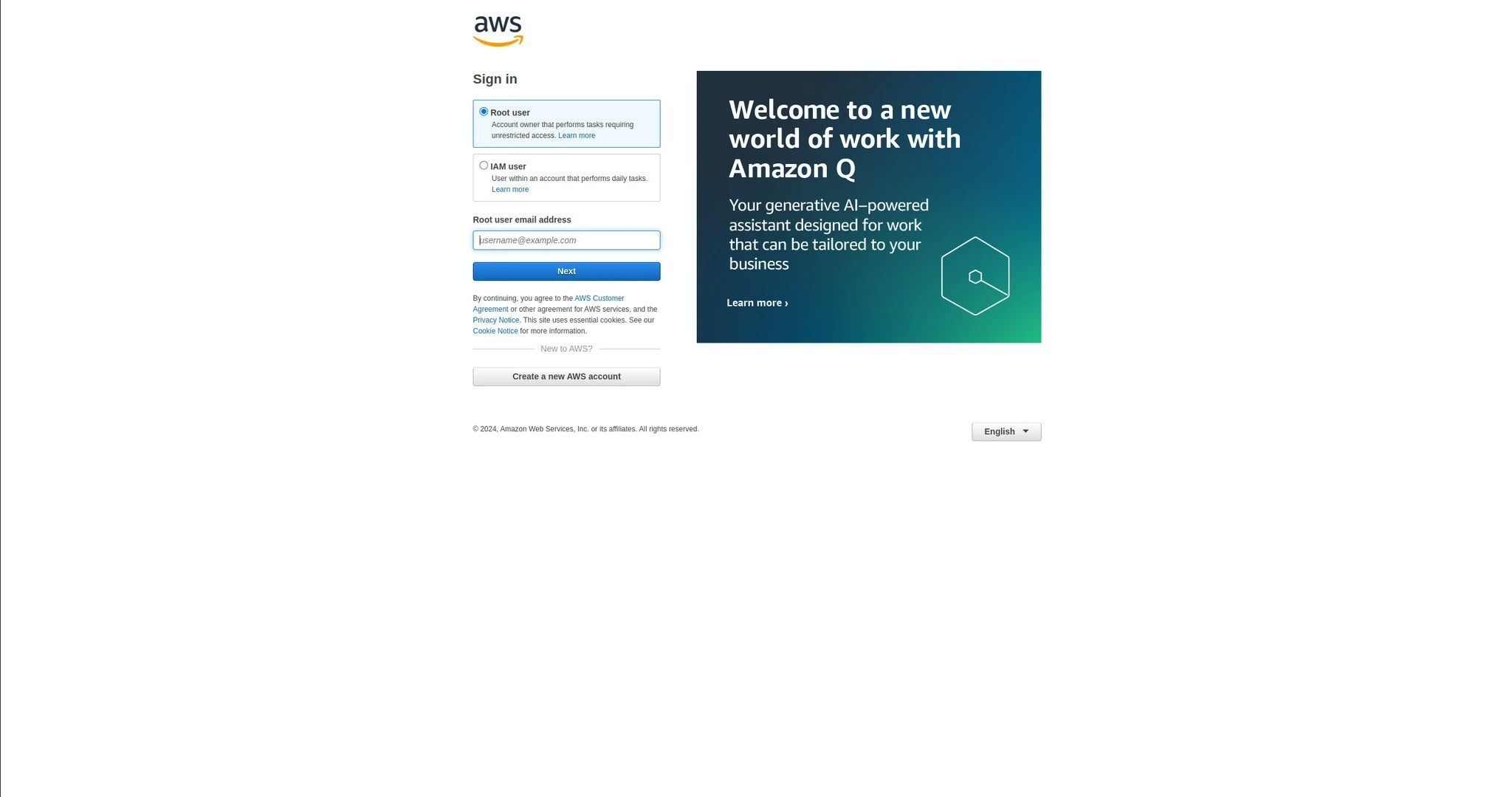
    Log into the AWS Management Console and navigate to the Redshift dashboard.

    <Frame>
      <img src="https://mintcdn.com/superjoin/95T8cmea616drJuC/images/redshift/redshift-step4.webp?fit=max&auto=format&n=95T8cmea616drJuC&q=85&s=2bb21ec133c5a6ff904c1030ac24bbf5" width="2048" height="1079" data-path="images/redshift/redshift-step4.webp" />
    </Frame>
  </Step>

  <Step title="Select the workspace">
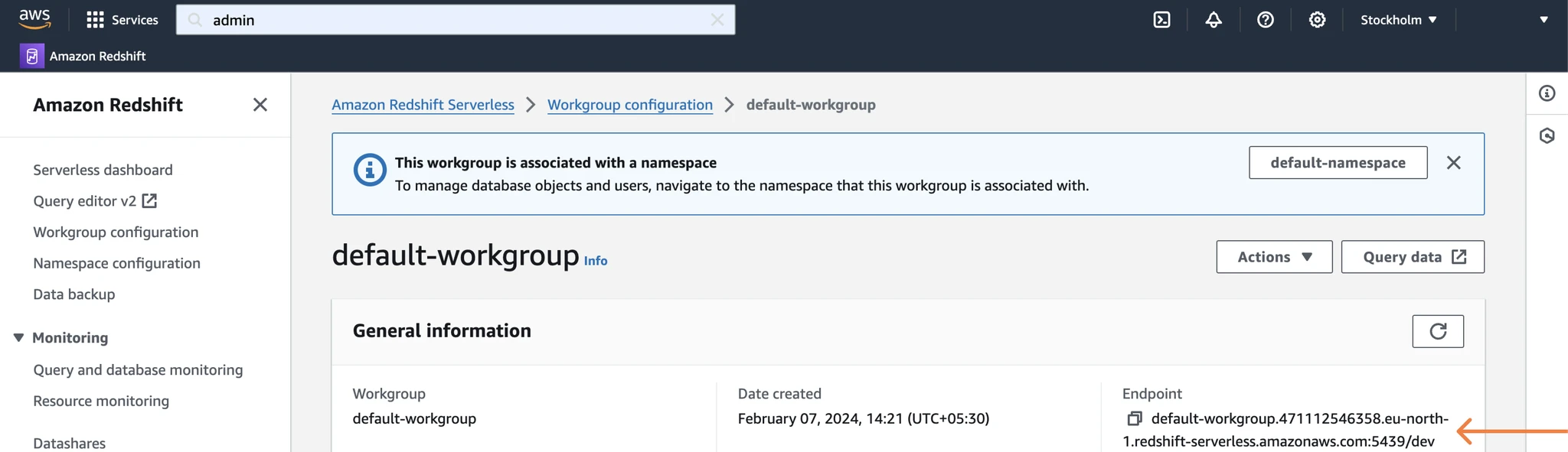
    Select your workspace to view its details.In the Workspace Configuration tab, you can find the Endpoint and Port information.

    <Frame>
      <img src="https://mintcdn.com/superjoin/ZxJLQet0XJWypOF3/images/redshift/redshift-step5.1.webp?fit=max&auto=format&n=ZxJLQet0XJWypOF3&q=85&s=01548fcd5f509dd8429a009b06cc13e6" width="2048" height="591" data-path="images/redshift/redshift-step5.1.webp" />
    </Frame>

    <Frame>
      <img src="https://mintcdn.com/superjoin/ZxJLQet0XJWypOF3/images/redshift/redshift-step5.2.png?fit=max&auto=format&n=ZxJLQet0XJWypOF3&q=85&s=82f4a82ae16886a5ae990466dcdd2d6b" width="2816" height="580" data-path="images/redshift/redshift-step5.2.png" />
    </Frame>

    <Frame>
      <img src="https://mintcdn.com/superjoin/ZxJLQet0XJWypOF3/images/redshift/redshift-step5.3.png?fit=max&auto=format&n=ZxJLQet0XJWypOF3&q=85&s=c27dcc046f46a83302fe6353d9fb1616" width="2816" height="580" data-path="images/redshift/redshift-step5.3.png" />
    </Frame>
  </Step>

  <Step title="Enable SSL">
    <Note>
      Implementing SSL for your database connections is a critical step toward securing your data. By following the specific steps  you can protect your database from unauthorized access and ensure that your data remains confidential and intact during transmission.
    </Note>

    If your database has a secure connection enabled (SSL), make sure to also enable it on Superjoin when connecting.
  </Step>

  <Step title="Complete logging in">
    Return to your Google Sheet & Superjoin. Click "Authorize" to finalize the connection settings. Once connected, Superjoin will display the Data Preview to confirm everything is running smoothly.
  </Step>
</Steps>