

#1 You don't have access to the report.
#1 You don't have access to the report.
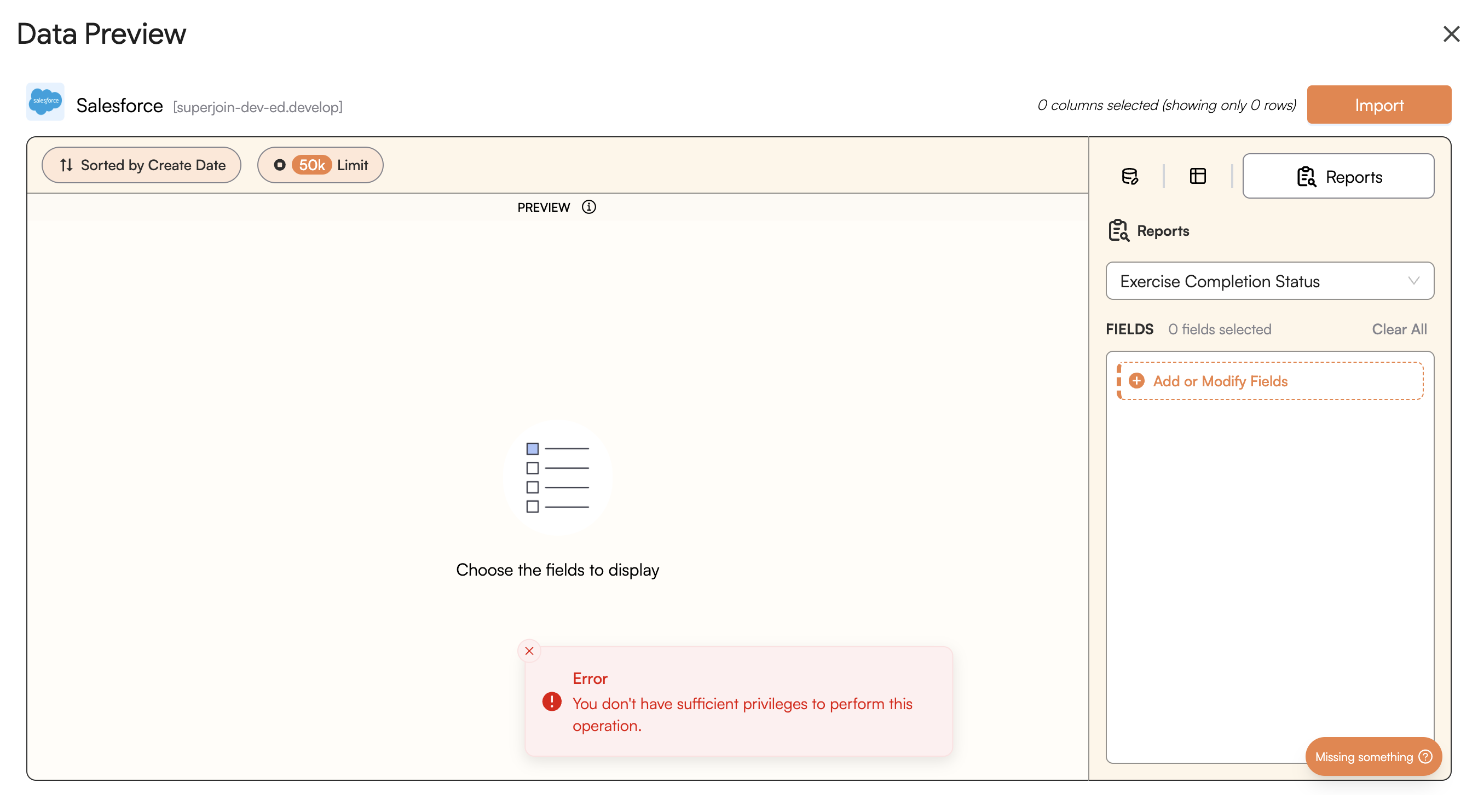
Solution
1
Verify your Salesforce Permissions
If you believe that you have the right permissions on your user account to access report, you can verify the access to the report on the Salesforce Dashboard.
Follow the next steps if you encounter the same error.
2
Log into your Salesforce account
On a new web browser tab, navigate to your Salesforce account. Make sure to select the same account that you are using in Superjoin. Navigate to Reports Tab.Locate the report you want to access and click on it.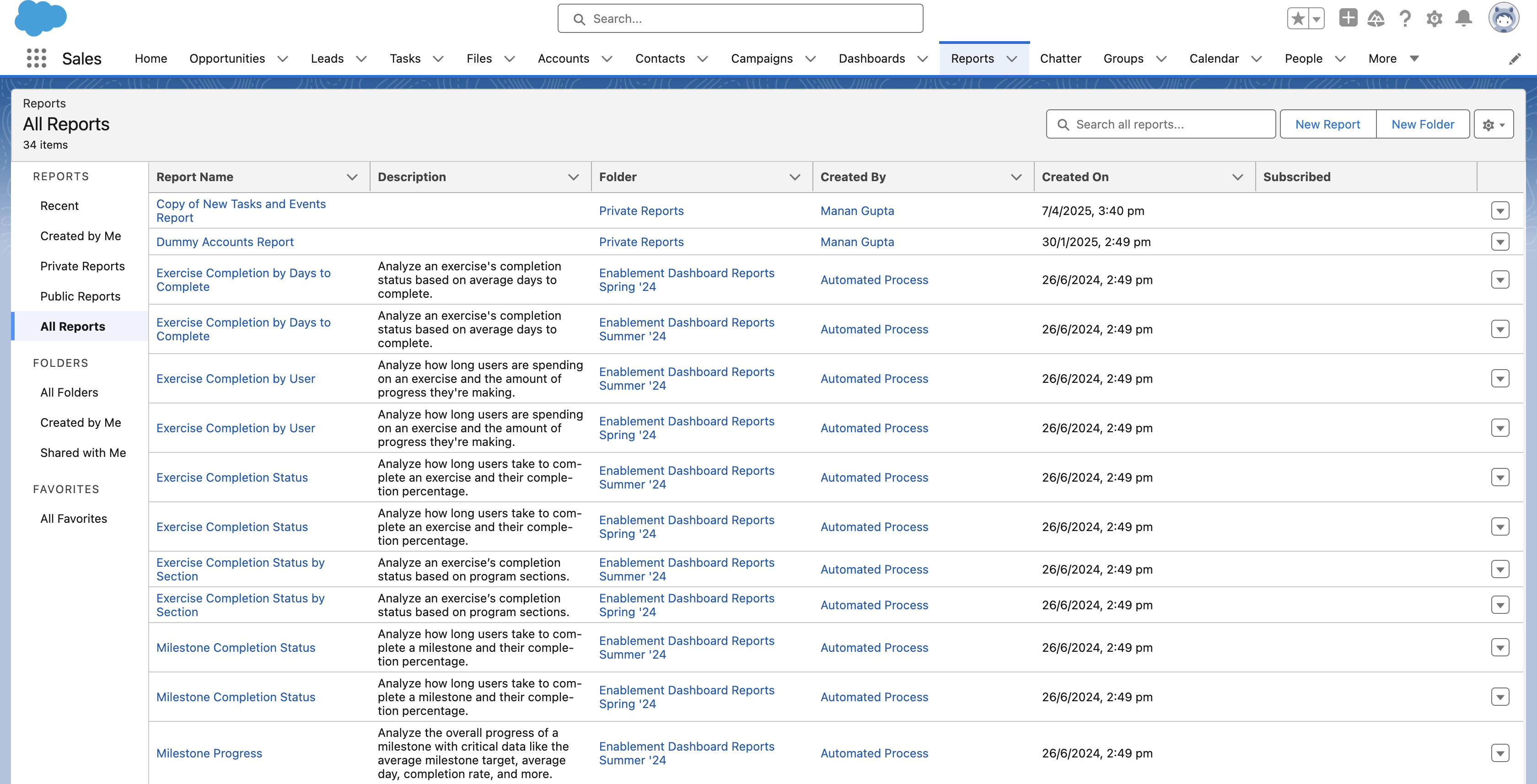
If you are not sure which report to access, you can try the following:
- Switch to
All Reportssections - Check the report name and description
- Contact your Salesforce administrator for help
3
Try to view the report
Click on the report you were trying to access. In case you get an error, you will have to contact your Salesforce administrator for help.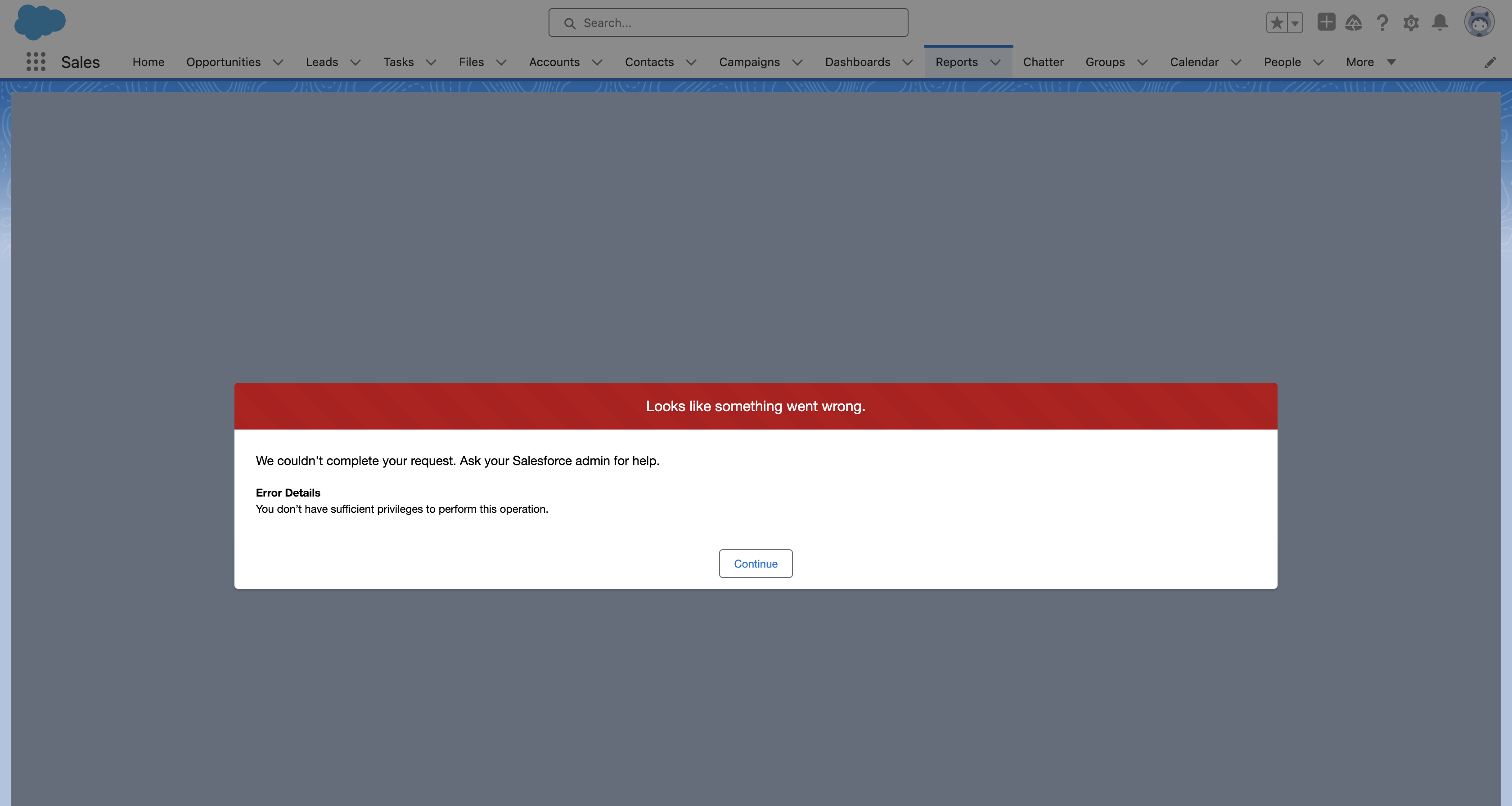
4
Contact Support
If you are still facing the same issue, reach out to support@superjoin.ai and we will help you.
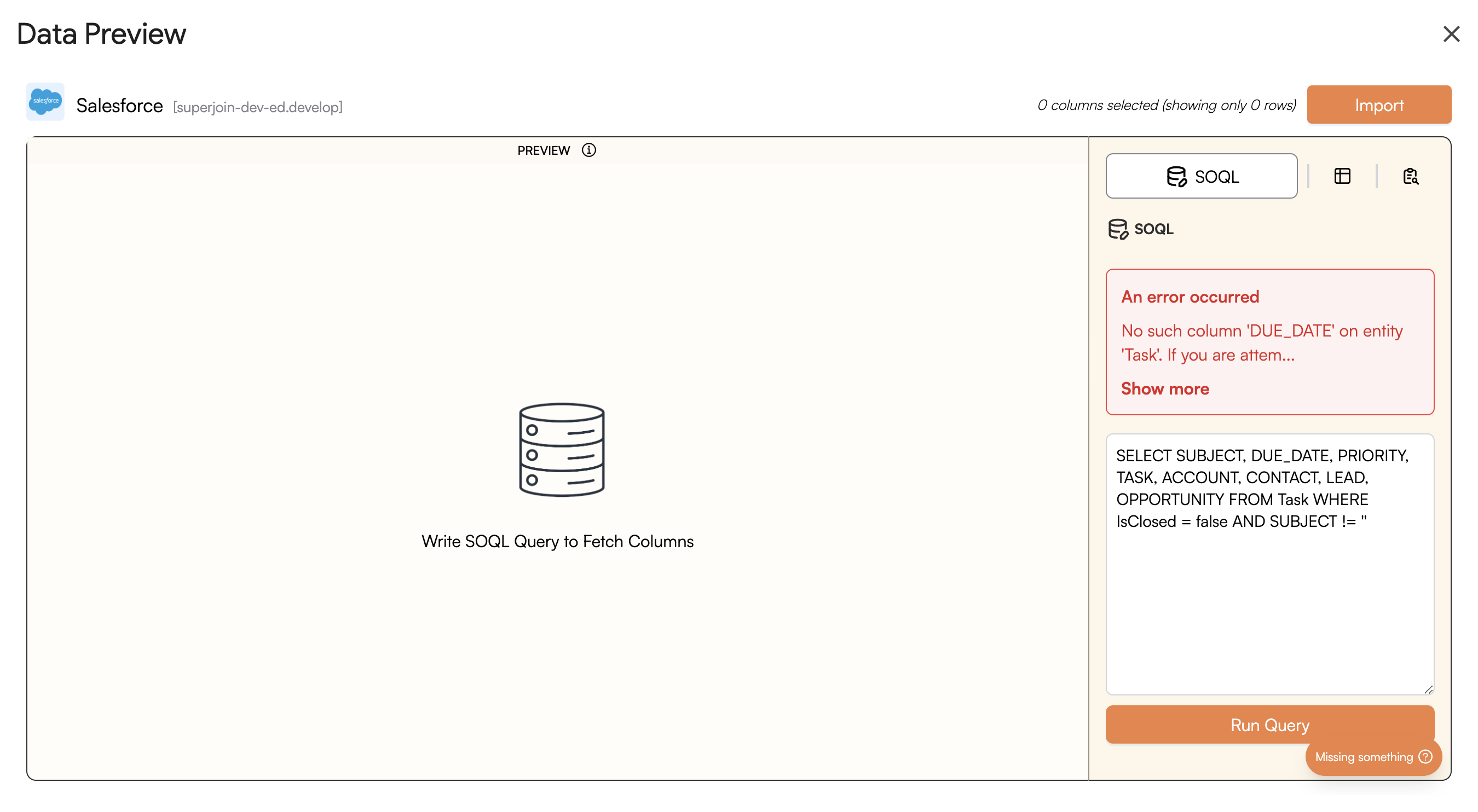
#2 Errors while importing data from Salesforce using SOQL
#2 Errors while importing data from Salesforce using SOQL
Solution
1
Check the SOQL you are using.
You can refer to the summary of the error message in the error box to understand what the potential issue is.
2
Use the Error Modal
You can click 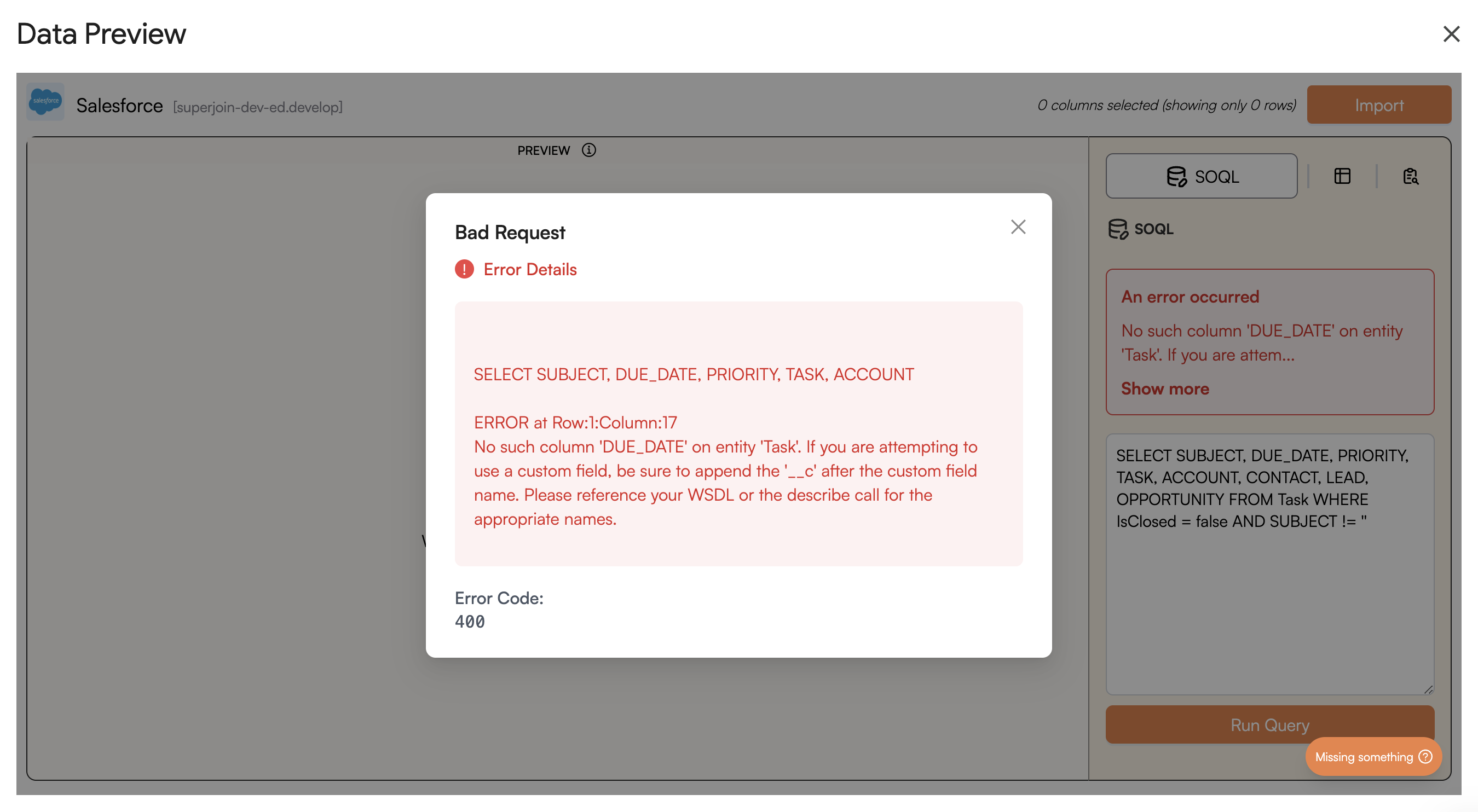
Show More in the error box to get more details about the error.3
Common SOQL Errors
-
Invalid SOQL Query: Your query syntax is incorrect. Check:
- Query structure
- Field names
- Object references
- Aggregations
- Filter conditions
-
Invalid Field Name: The field doesn’t exist in the object. Verify:
- Field spelling
- Field availability
- API name vs. label
-
Invalid Aggregation: Your aggregation is incorrect. Ensure:
- Proper aggregation syntax
- Correct field types
- Valid object relationships
-
Invalid Filter Condition: Your WHERE clause has issues. Check:
- Operator usage
- Value formatting
- Date formats
- Null handling
4
Reach Out for Support
Not sure what to do next? Reach out to us at support@superjoin.ai. We will respond immediately.
#3 Errors: Org Policies Preventing Report Opening
#3 Errors: Org Policies Preventing Report Opening
Your org might have policies that prevent opening of Reports - the most frequent one is Multi-Factor Authentication.
Solution
1
Disable Multi-Factor Authentication
Disable Multi-Factor Authentication in your Salesforce account and then try again after sometime.
2
Verify Organizational Permissions
Confirm with your Salesforce administrator about the specific policies preventing report access.
3
Contact Support
If you are still facing the same issue, reach out to support@superjoin.ai and we will help you.
#4 Errors: Org Policies Preventing Report Export
#4 Errors: Org Policies Preventing Report Export
Your org might have policies that prevent export of Reports. The Profile that your user account is associated with might not have the necessary permissions to export reports.
Solution
1
Verify Export Permissions
Discuss export limitations with your Salesforce administrator.
2
Enable Export Permissions
Enabling export permission may be done only by a Salesforce administrator.
1
Navigate to Setup page
On a new web browser tab, navigate to your Salesforce account. Navigate to Setup Tab found on the top-right corner.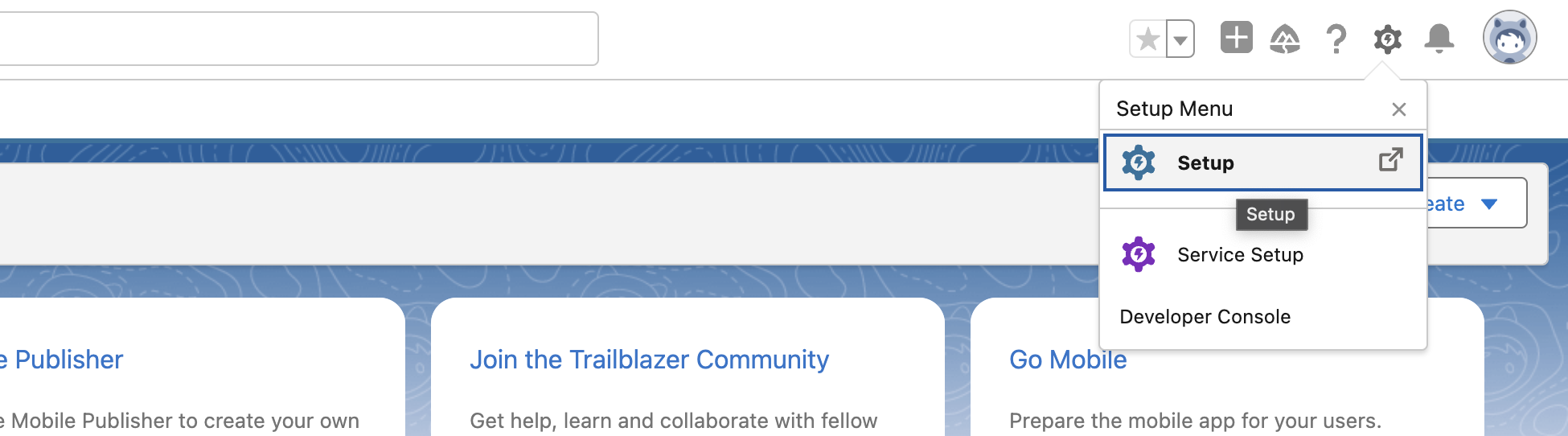
2
Navigate to Users page
Navigate the the Users page. You may use the search bar on the left side of the page to find the Users page.The option is found under Users in the left navigation menu. (Users > Users)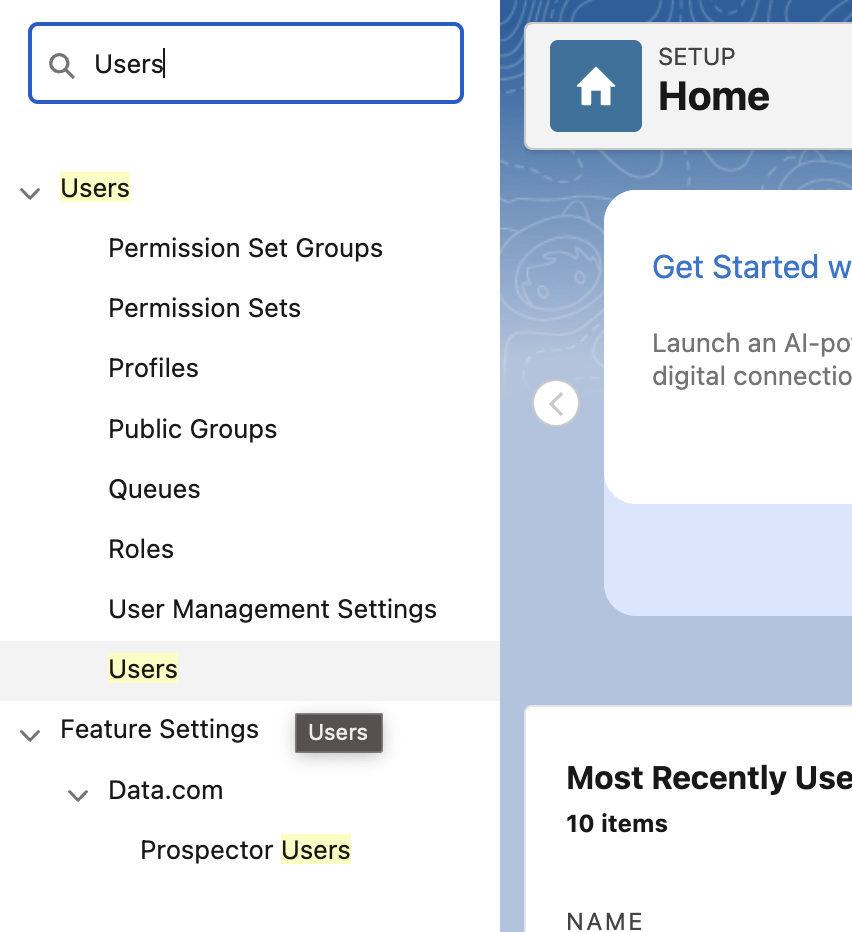
3
Navigate to Profile page
Note the Profile of the user account you are using in Superjoin. You may click the Profile name to navigate to the Profile page.
Here you will modify the settings for the Profile to allow export of reports.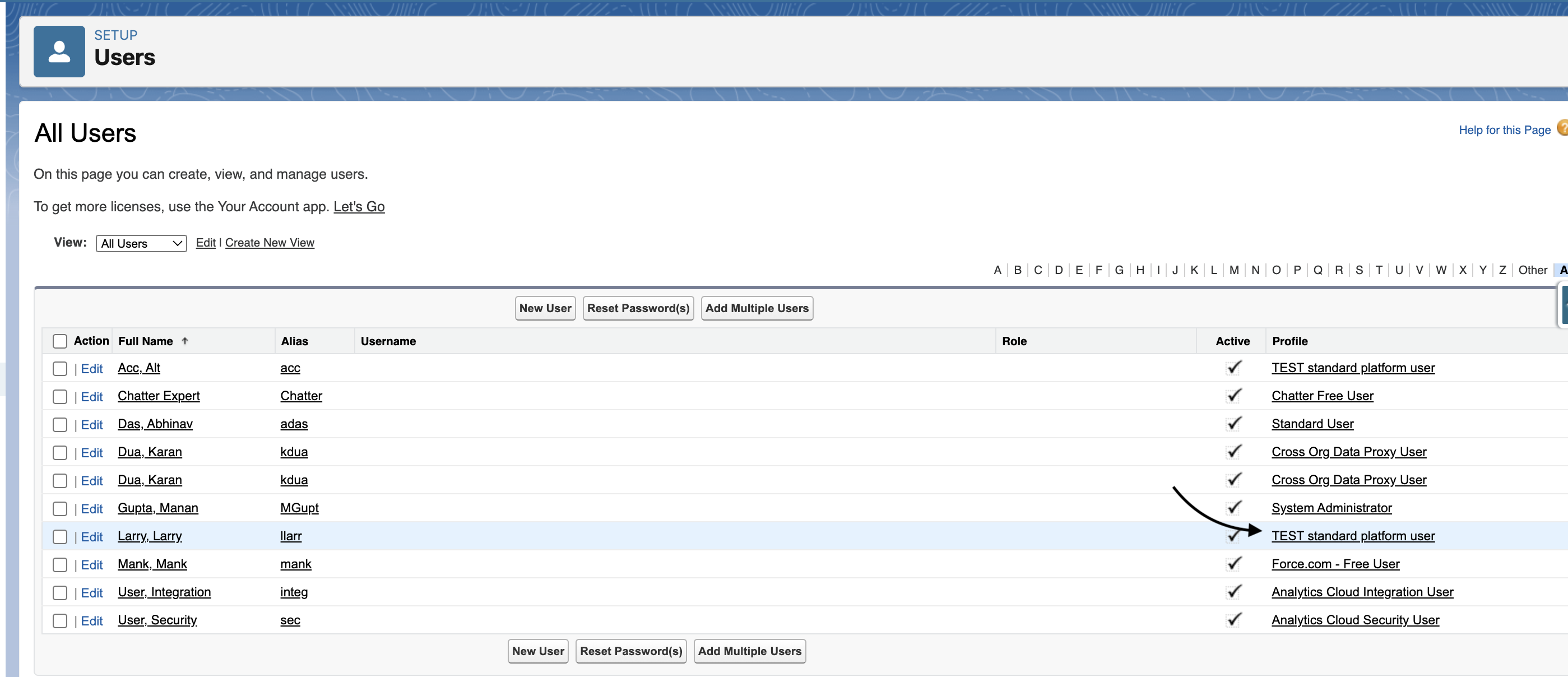
4
Editing Profile
Click on Edit button to modify the settings for the Profile. and then scroll down to General User Permissions section.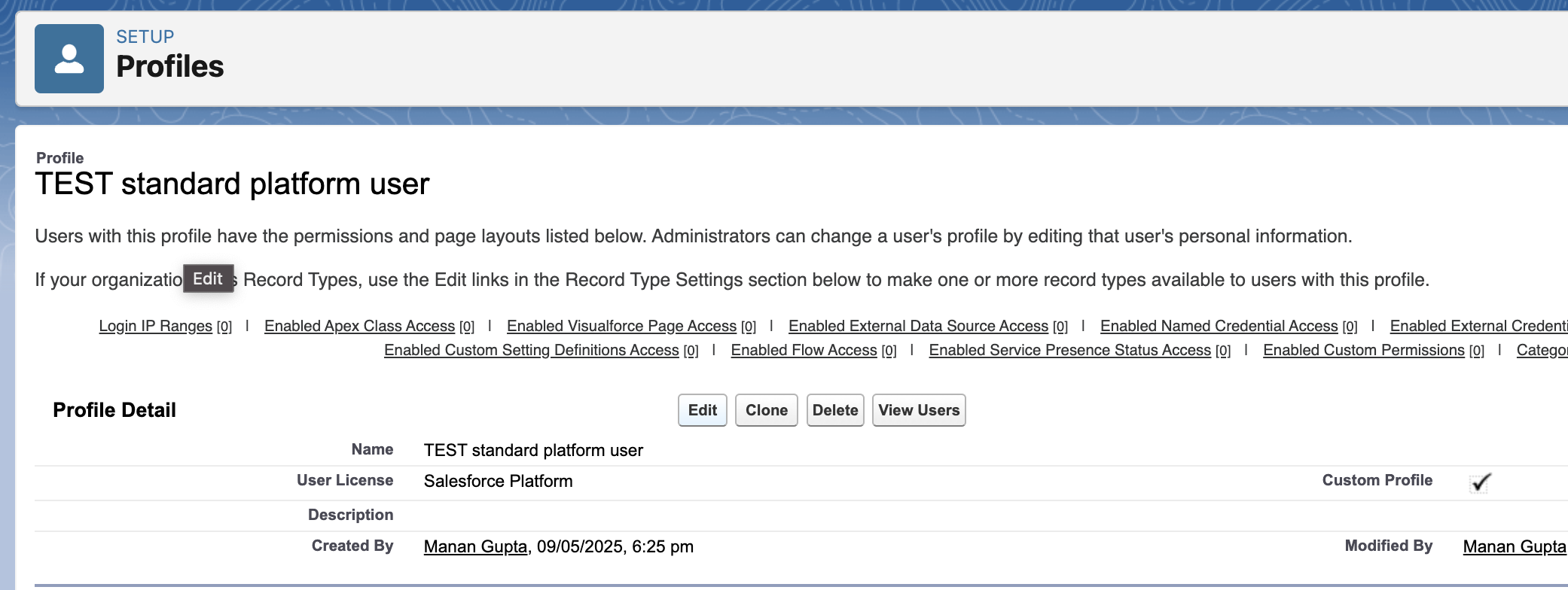
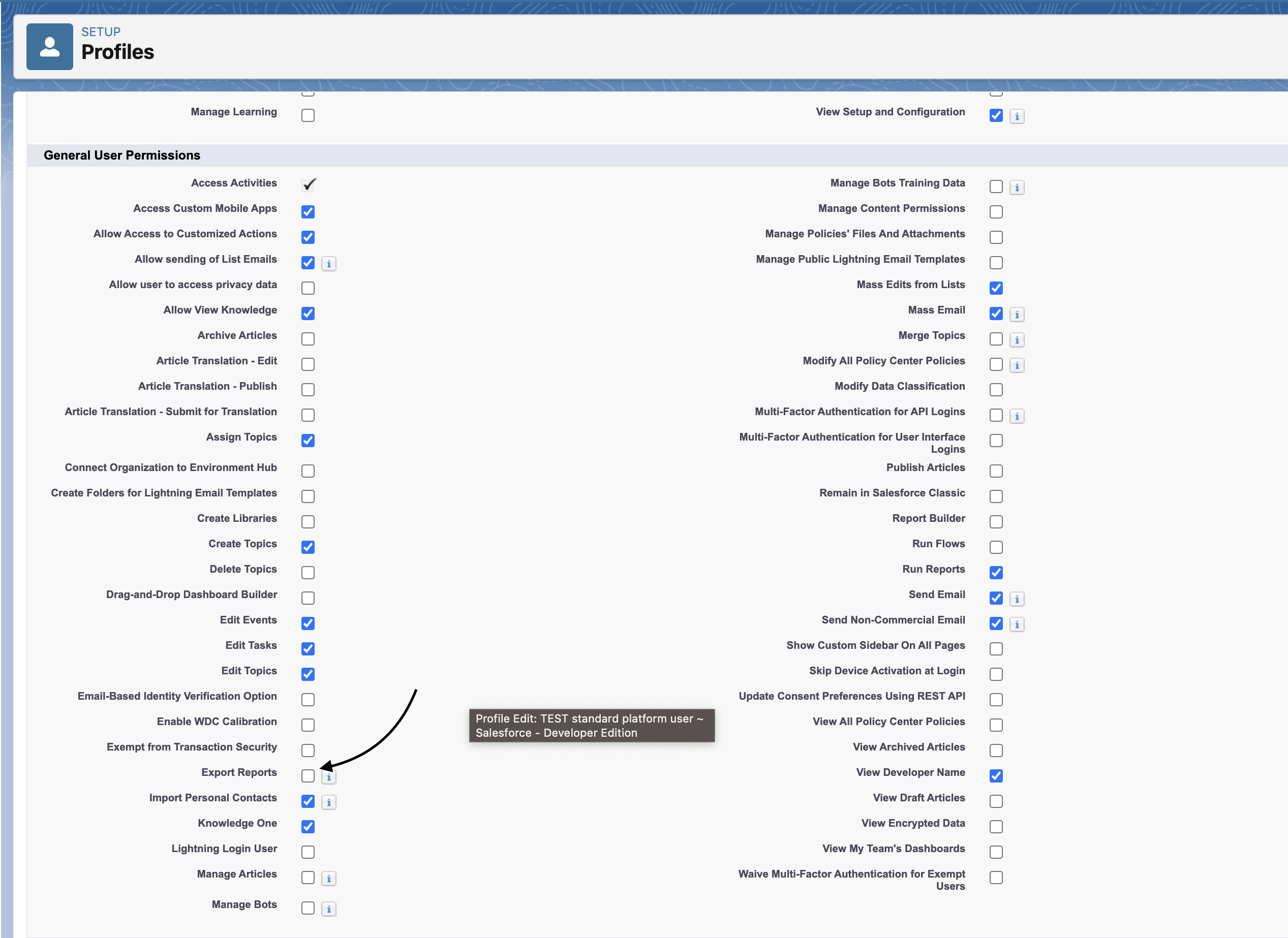
In case you are not able to enable the Export Reports option, the profile may be a Standard Profile. In that case, you will have to clone the profile and make sure Custom Profile is enabled.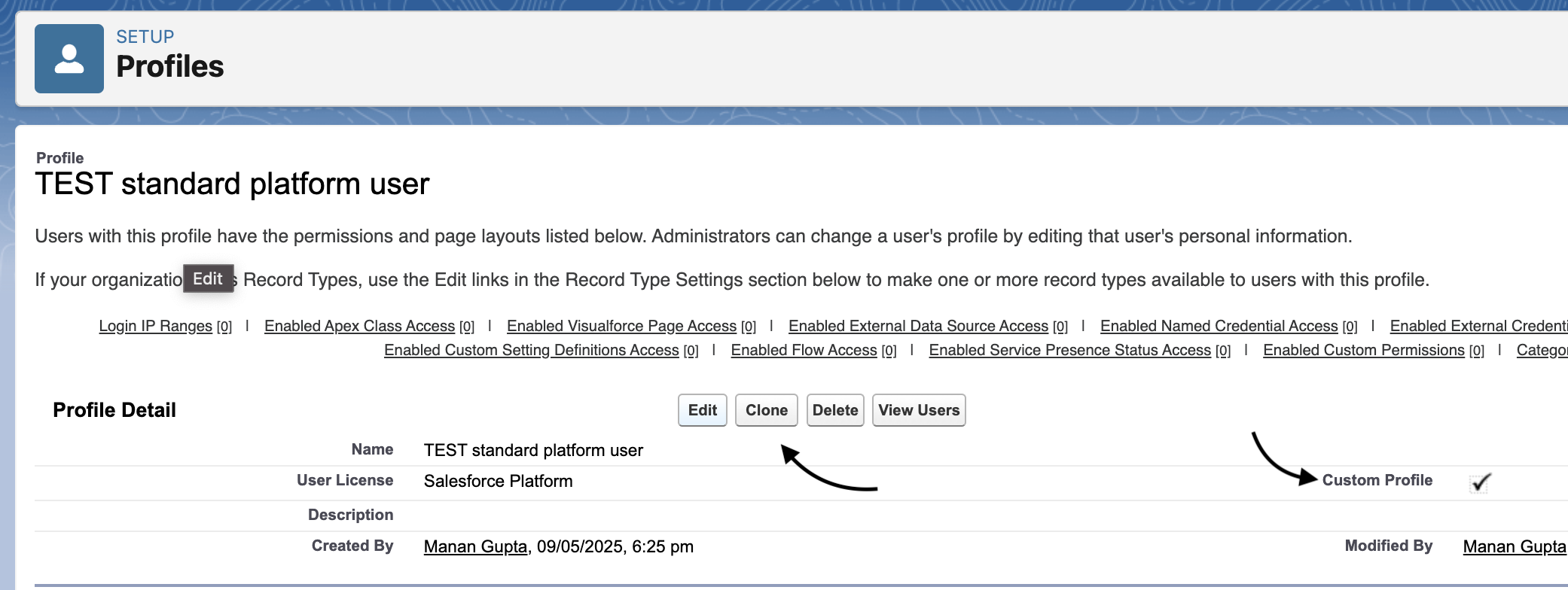
5
Export Report
After following all the steps, you are ready to export the report. Head over to Superjoin and try again.
3
Contact Support
If you are still facing the same issue, reach out to support@superjoin.ai and we will help you.
#5 Errors: Joined Reports Are Not Supported
#5 Errors: Joined Reports Are Not Supported
Salesforce currently imposes limitations that prevent exporting the row-level details of joined reports. While you can export joined reports in a formatted view, detailed data exports (e.g., CSV format) are not supported . We anticipate that as Salesforce continues to enhance its reporting capabilities, full export functionality for joined reports may become available in future platform updates.
How to Identify a Joined Report:
Joined reports are created by combining multiple report types or objects into distinct blocks within a single report. To determine if a report is a joined report: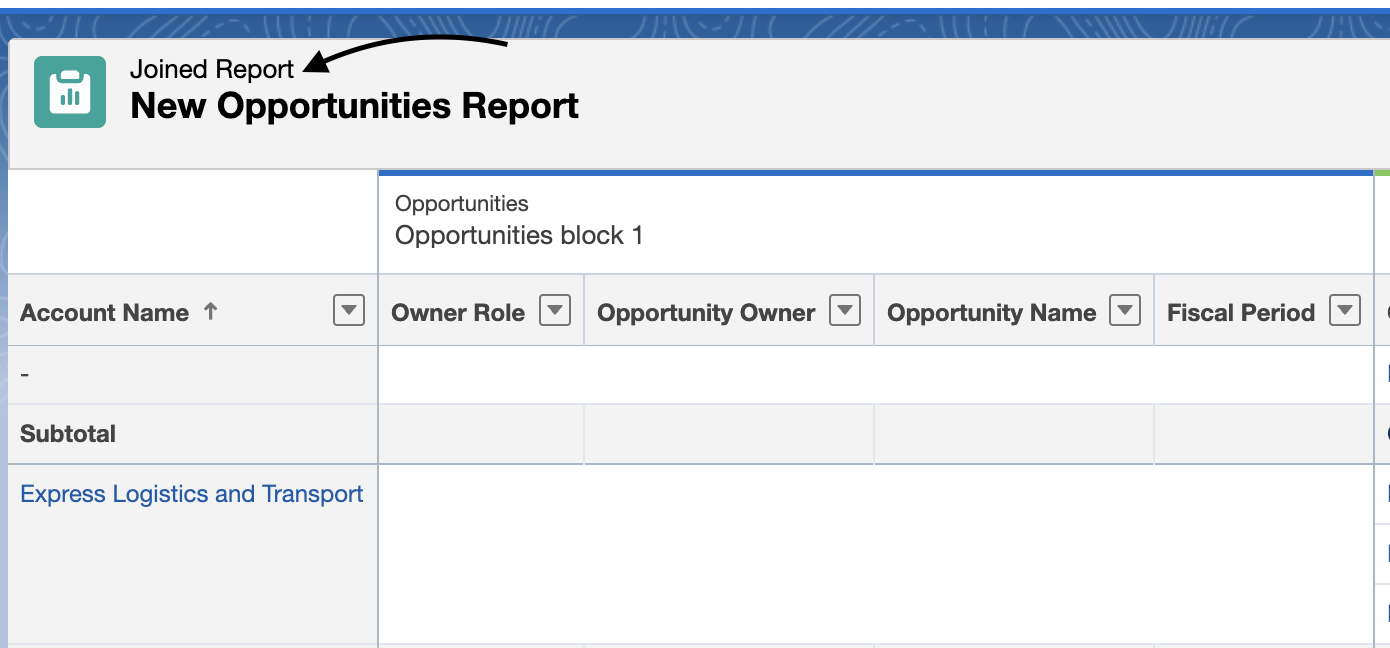
- Open the report in Salesforce.
- Check the report format indicated above the report name; it will display “Joined Report” if applicable.